
Aligning community capacity with social needs

A major—but not well-publicized—shift happened in recent health policy: requirements from both the Joint Commission and the Centers for Medicare & Medicaid Services went into effect that required hospitals to screen inpatients for social needs. There are now standard data fields reported by hospitals to the Maryland Health Information Exchange (Chesapeake Regional Information System for our Patients - CRISP) around screening results.
Many hospitals were doing some degree of this work already, but the mandate has meant a shift in reporting, which will ultimately drive a shift in available data. That data shift allows us to ask new questions about the impact of social service interventions among our patient populations.
It also presents new opportunities for systemic collaboration among healthcare and social services providers, starting at the point of highest acuity: when patients are sick enough for a hospital admission.
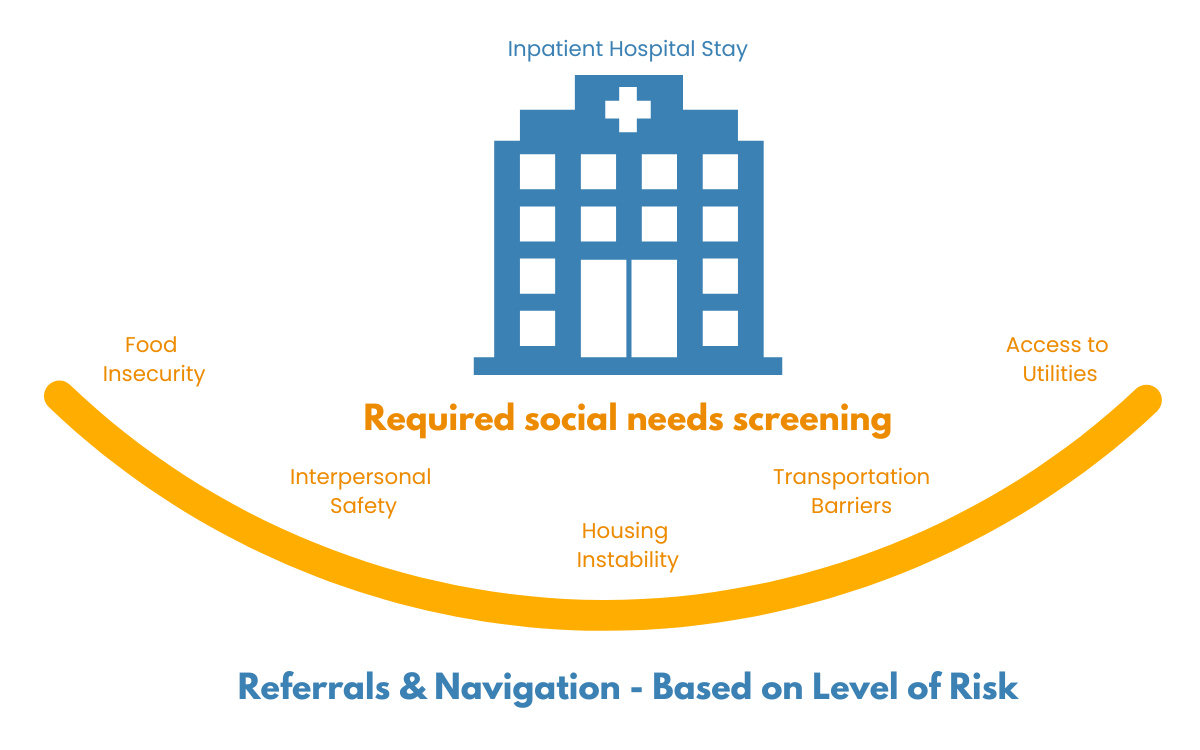
If—as the RWJF model demonstrates—community and social needs predict 80% of healthcare outcomes, it makes sense for hospital inpatients to be the sentinel surveillance population. The needs they express can tell us something important about the most pressing needs in our community. They also give us a point for centralized coordination or case management, roles that many healthcare providers offer to varying degrees but for which reimbursement sustainability can be a challenge. In other words, it’s an opportunity to create administrative economies in the process of connecting patients to health-related social needs.
The same reasons our local hospitals collaborate on community investments through the Nexus Montgomery Regional Partnership apply in managing social service referrals as well: our hospitals have overlapping patient populations. Multiple referrals from multiple hospital touchpoints are not likely to improve patient resources. They are likely to create inefficiency for hospital staff, extra work for nonprofit providers responding to duplicate requests, and frustration among patients trying to identify the best source of support.
The coming Social Health Alliance is funded by a grant from Maryland Physicians Care. The Social Health Alliance is a partnership among PCC, Nexus Montgomery hospitals, and community food providers offering a chance to address all of these challenges and opportunities. The roughly two-year project will design a system for better coordination among hospitals and community-based providers to manage individual client referrals, AND it will develop tools to monitor community capacity to meet referral needs. It recognizes the forest AND the trees. Not to mention the land management policies that will keep both healthy in the long term.
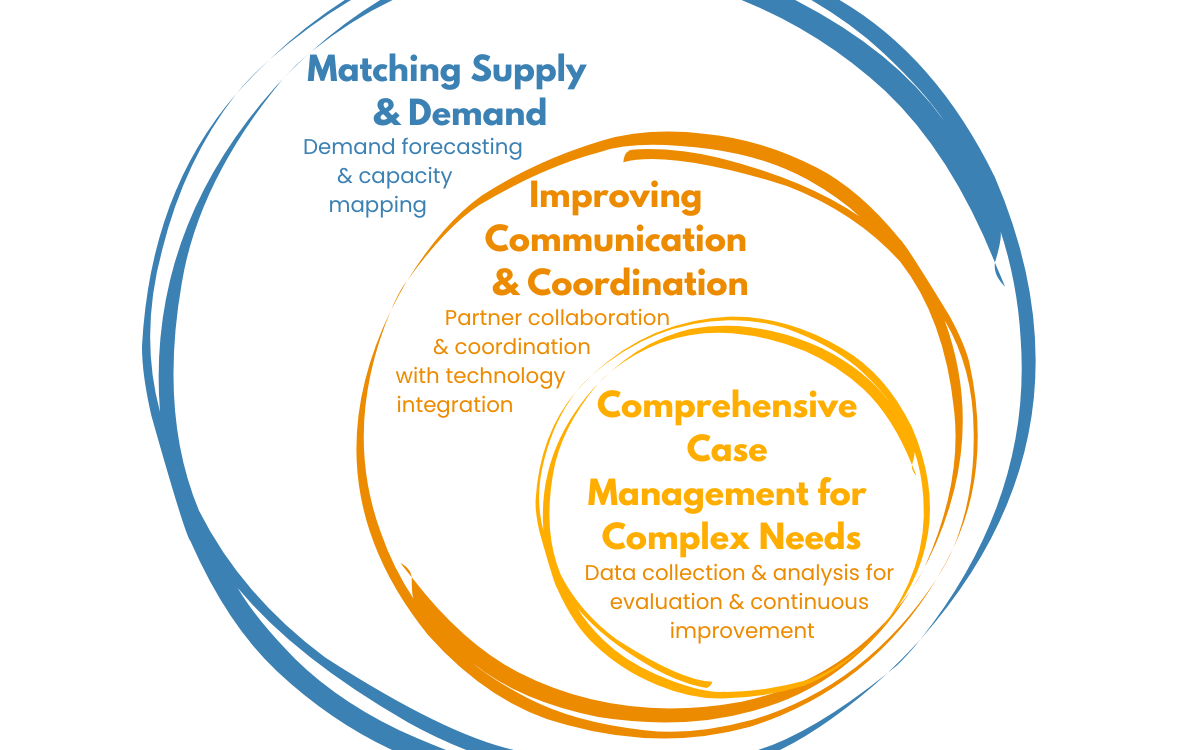
Evidence from other communities shows the potential for concentrated referral partnerships to save on healthcare spending. The IMPaCT model tested through a Pennsylvania health system projected a $2.47 annual return per dollar spent providing comprehensive community health worker support to residents with high social needs and multiple chronic conditions. Evaluation of North Carolina’s NCCare360 model for meeting social needs is telling because it considered not just the effectiveness of referral pathways but the impact of funding availability on the entire process. Comparing the number and completion of referrals in a year with additional COVID relief funds for social services versus a year without that funding demonstrated an impact on both. Resource constraints appeared to influence not just receipt of services but referral to them in the first place.
This project builds on existing evidence with its potential to model gaps between aggregate patient needs and available community resources. It promises a lot by doing what PCC does best: bridging different levels of our service ecosystem to create new pathways for change.